If you want to document the progress of a construction project, you have plenty of options: photos taken by the site management team, a GoPro, a fixed time-lapse camera, the security cameras already on site, a professional photographer, 360° cameras, or other camera systems. The prices and benefits vary widely. We’ve compared the options side by side so you can decide for yourself which one best suits your project.
The most common way to document a construction site is also the simplest: the site manager takes photos with his smartphone and shares them via WhatsApp, email, or the site report. It costs nothing extra and is quick.
However, these images are sporadic and were taken from different angles each time. Anyone who later wants to determine when a construction phase took place will have to search through chat histories and folders. The result is not a continuous time-lapse. And for communication or sales purposes, the individual photos are rarely useful.
So feel free to use smartphone photos if you need an internal update every now and then.
Action cameras, such as a GoPro, and simple time-lapse cameras are compact and inexpensive. For a short job lasting just a few days, such as a concrete pour, they may be sufficient.
For a full-scale construction project, they require more hands-on management. You have to handle power, storage, connectivity, and monitoring yourself. Without automatic monitoring, you might not notice a dead battery or a full SD card until your next site visit. Battery life and weather resistance can also pose limitations. Furthermore, the wide-angle lens distorts straight facades and columns at the edges of the image. Correction reduces this effect but crops out part of the image.
An action camera is therefore the best choice for short projects with a limited budget.
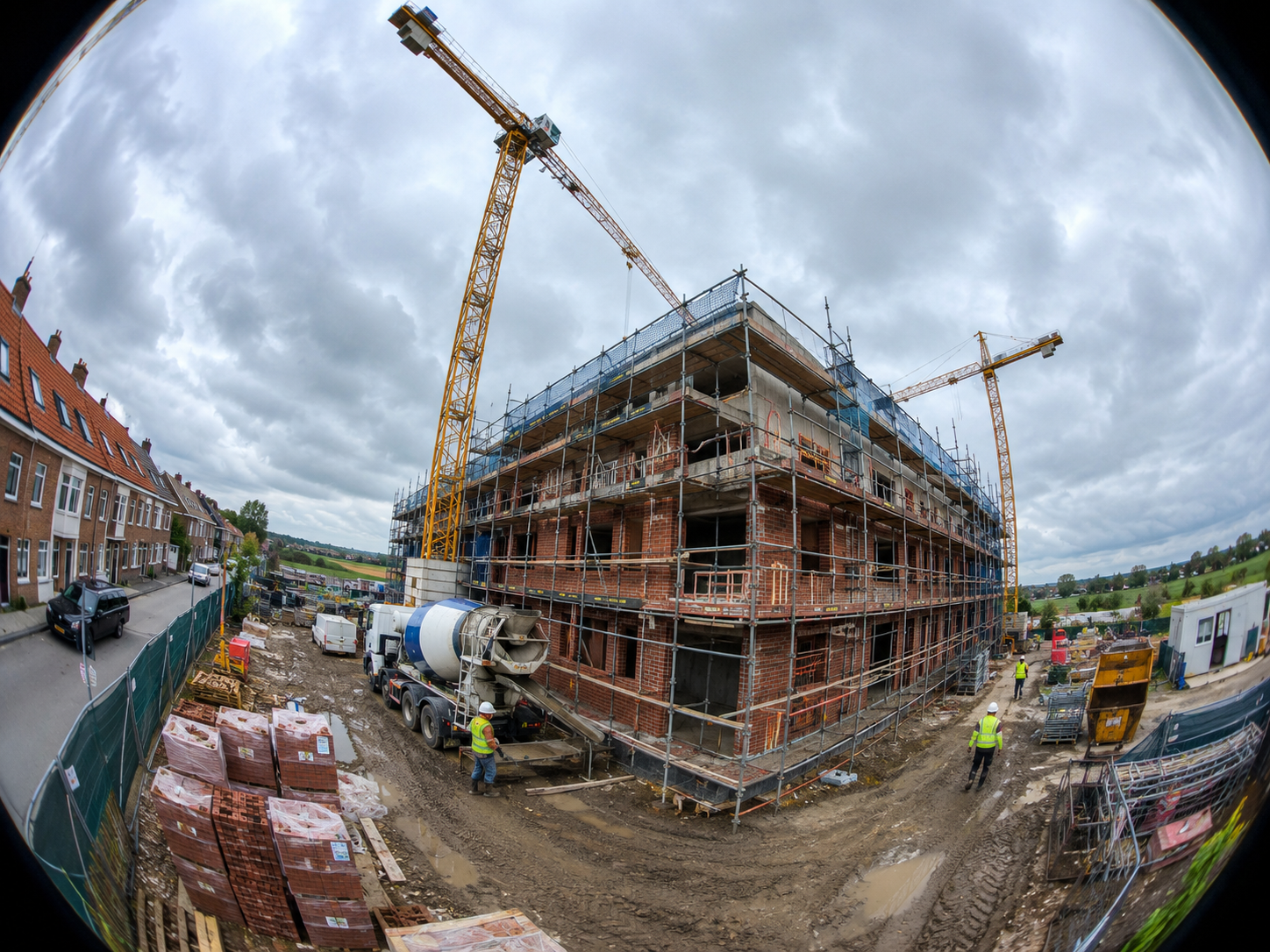
Many construction sites already have cameras or mobile camera masts installed for security purposes. It seems logical to use them to track progress as well. Security cameras are primarily designed for security. However, some professional construction cameras do combine security with project monitoring and time-lapse photography. The main differences lie in their purpose, image quality, archiving, and how the footage is used. In security systems, the camera position is typically optimized for surveillance, not for providing an optimal view of the construction site for time-lapse images.
So choose a security camera if security is your top priority and time-lapse footage is only a secondary consideration.
A professional photographer or drone pilot captures the most striking images. He or she captures the atmosphere, people, materials, and architecture. And drone footage shows the site in its surroundings. This is extremely valuable for communication and marketing.
As the sole form of monitoring, however, it remains a snapshot: you can’t see what happened between two visits. Each visit requires planning, access to the site, and good weather, and the costs per visit quickly add up over the course of a one- or two-year project. Photography and drone footage are therefore particularly effective as a supplement to key moments.
Professional footage is therefore recommended if you're looking for compelling marketing material from a specific phase.
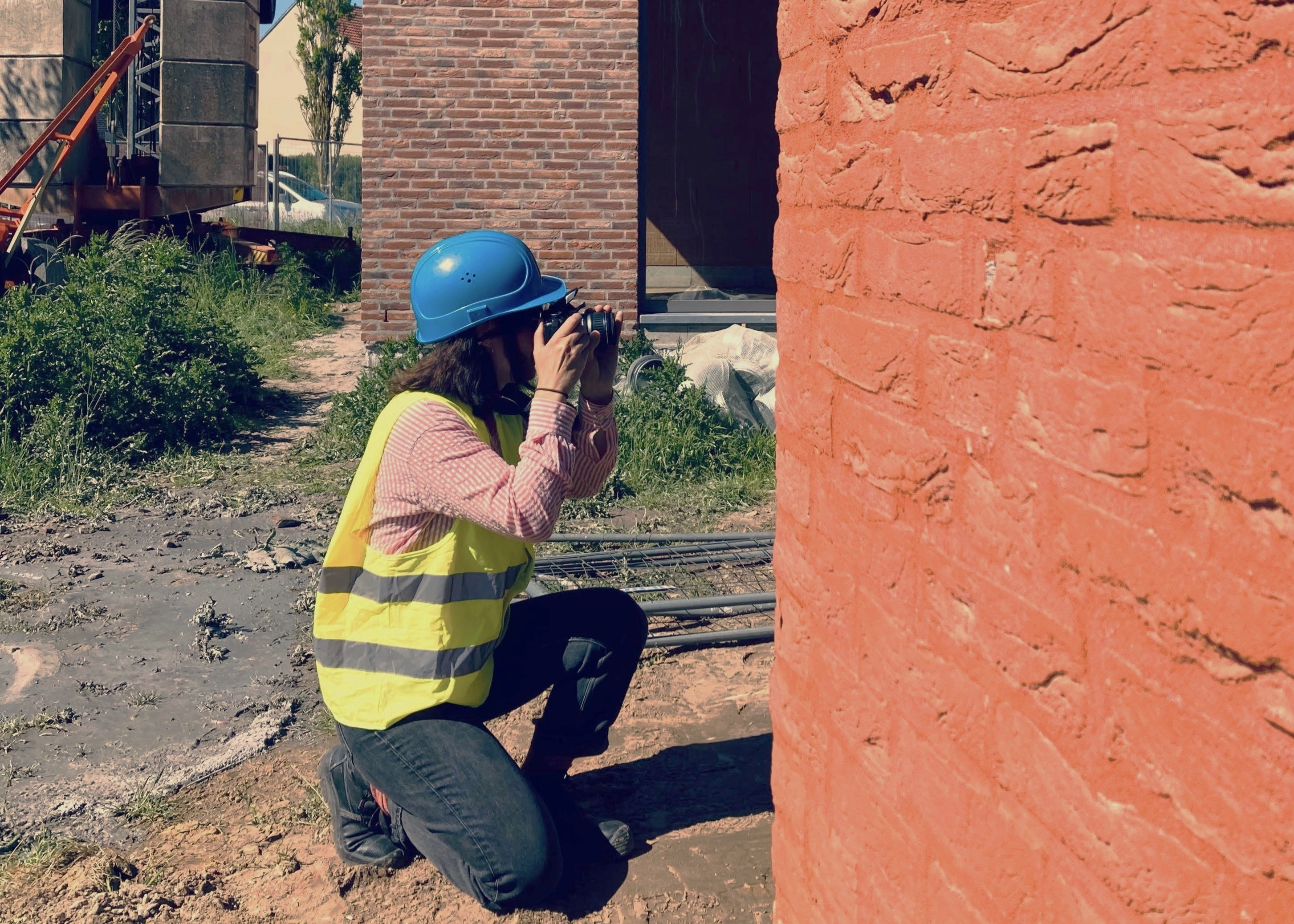
In reality capture, someone walks through the building with a 360° camera, after which software superimposes the images onto the floor plan. This is useful for monitoring the interior finishes and mechanical systems, and for later checking what’s behind a wall.
It does require a site tour each time, which involves a lot of planning. It also mainly shows the interior, not the progress of the project as a whole. The images are less suitable for communication purposes. Reality capture is therefore more of a supplement to a construction site camera than an alternative.
So, use a 360° camera if you want to document the interior in technical detail.
There are also rugged time-lapse cameras designed specifically for outdoor use. They are weatherproof and can operate autonomously for long periods of time.
The difference lies in what happens to the footage. If the photos are stored locally or only sent occasionally, you won’t have a real-time view remotely. With systems that don’t have automatic monitoring, you might not notice a malfunction or a misaligned camera until you check the footage. Sharing is done via email or shared folders, and installation and maintenance are your responsibility.
So, you can opt for a fixed time-lapse camera without a platform if you want to document over a longer period but don't need any interim images.
A fixed time-lapse camera records the construction process. An online platform adds remote access, image archiving, user management, and technical monitoring. C-SITE combines both into a single service, including installation and support.
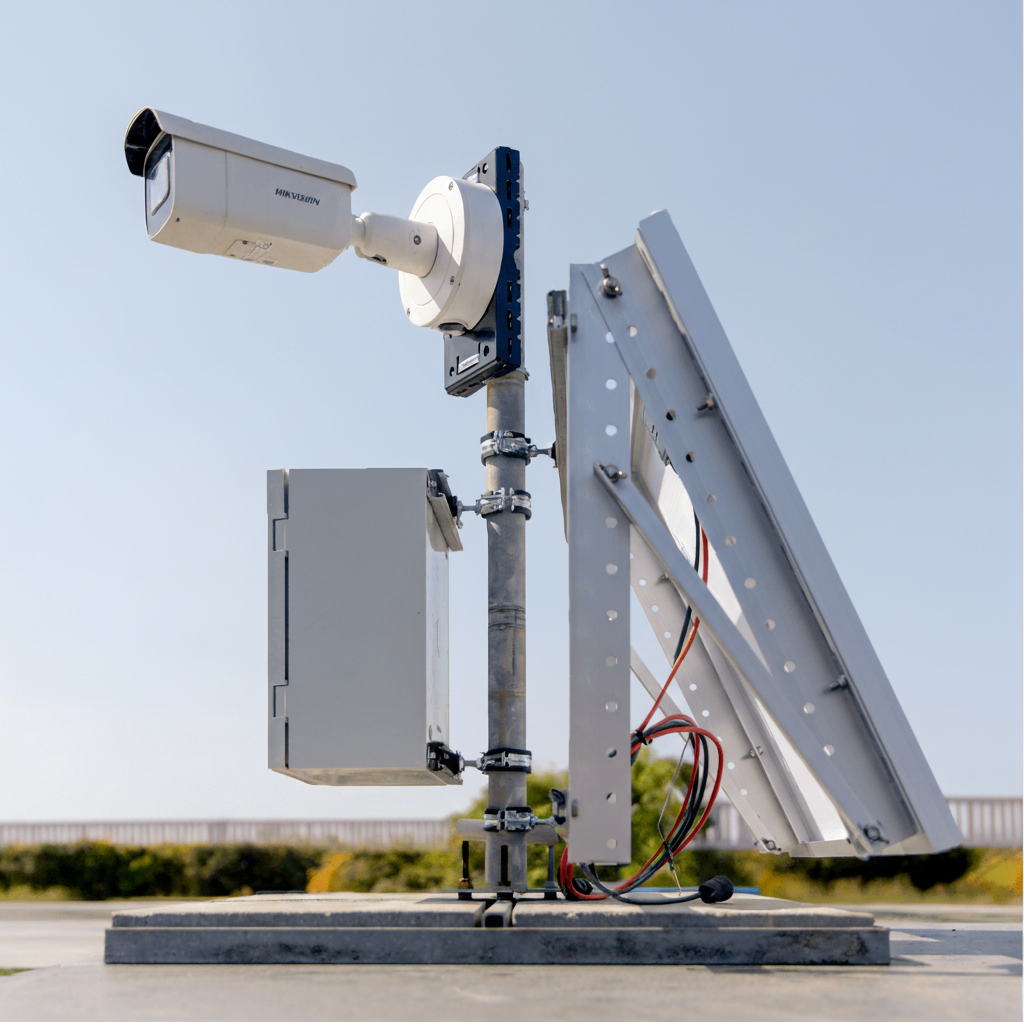
C-SITE cameras are designed to be mounted outdoors for months or even years. They run on electricity or a solar panel and take a photo every five minutes during the day, and one per hour at night and on weekends. The images are automatically sent to the platform via a 4G module, where you can view them immediately on your laptop or smartphone.
This allows you to monitor the construction site remotely and automatically build a complete image archive, without having to swap SD cards or process images manually. At OXY Brussels, a single C-SITE camera captured 98,656 photos over 972 days. C-SITE also determines the camera positions, installs the cameras, and monitors the technical systems. In the event of malfunctions, we receive a notification so we can intervene quickly.
A fixed time-lapse camera with an online platform is particularly well-suited for long-term construction projects where you want to continuously document progress, monitor it remotely, and share the footage with various stakeholders.
There is no single solution that is the best choice for every construction project. The right choice depends mainly on the duration of the work, how often you need images, and what you plan to do with them.
For a quick job or simple in-house use, a smartphone, GoPro, or basic time-lapse camera may suffice. If you’re primarily looking for high-impact images for communication purposes, a photographer and a drone are good choices. For monitoring the interior finishing work, 360° reality capture may be a useful option.
Is your project scheduled to last several months or years, and do you want to be able to monitor its progress continuously without having to send someone to the site every time? In that case, a fixed time-lapse camera with an online platform is usually a better choice. Not only do you get continuous recording, but you also have remote access to the footage, a central archive, and the ability to monitor the camera itself.
For many projects, a combination is the most effective approach: a fixed time-lapse camera for continuous monitoring, supplemented by photography, drone footage, or video at moments that deserve extra attention.
Wondering which approach is best suited for your construction project? Request a demo of the C-SITE platform.

